CONTENT WARNINGS: Sexual assault/rape, physical assault, time-period typical violence (including gun violence), murder
I will not go into specific detail on these topics, but they may be mentioned in this review. These themes/instances are unavoidable in the book
Rating: 3/5
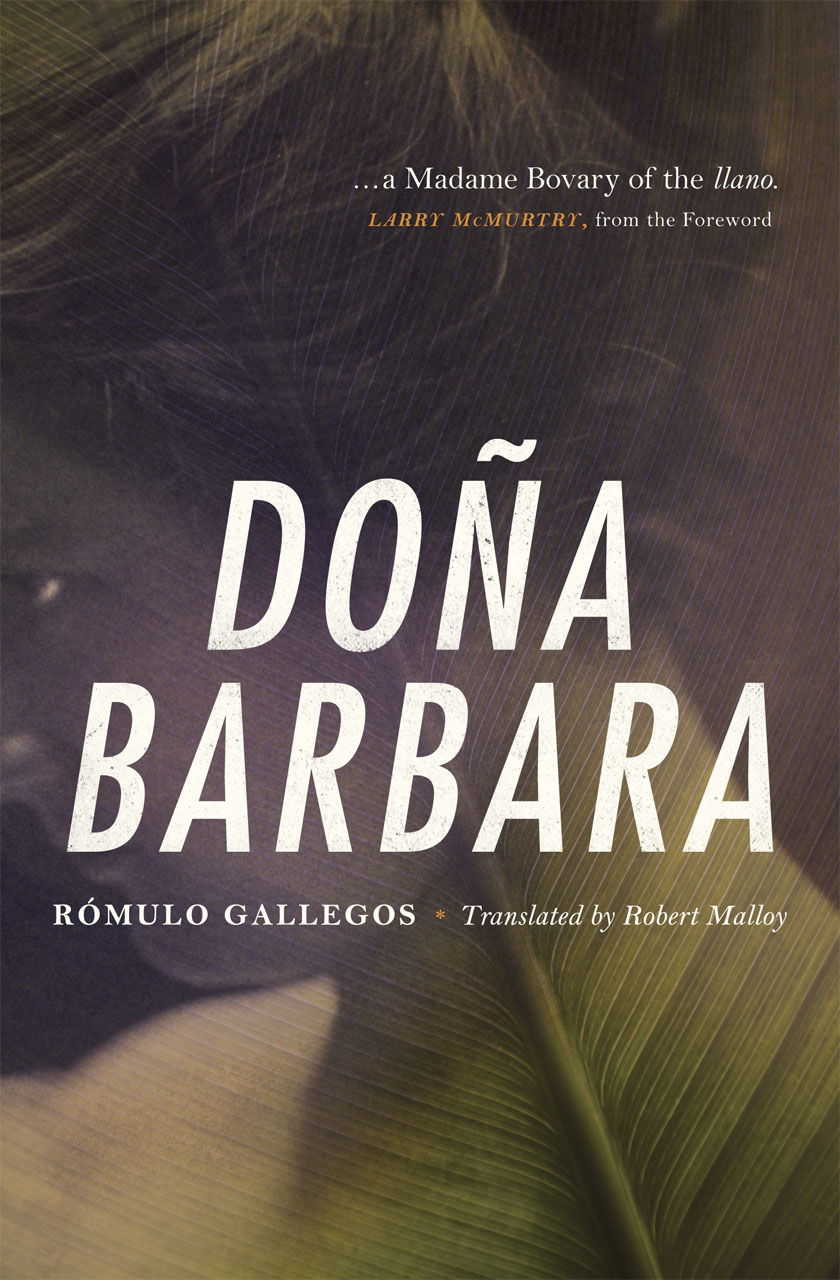
Though this was the first book on the Great American Reads list, this was actually the second one I ended up reading. Perhaps unsurprisingly, even at a decent-sized Barnes and Noble there isn’t a huge demand for English translations of 1920s Venezuelan literature so I did have to get it ordered in. I’ll admit, seeing it compared to Madame Bovary right on the cover gave me some wicked flashbacks to AP Literature. As far as books I had to read in high school that one wasn’t on my shit list (looking at you, Huck Finn) so I wasn’t overly worried. To get a little AP Lit for a moment, I do want to talk a little bit about the author before I talk about the book itself.
Rómulo Gallegos was a Venezuelan politician and novelist, who served as the nation’s first democratically elected president in 1948. First published in 1929, the backlash from Doña Bárbara forced Gallegos to flee his homeland to Spain until 1936. It’s important to know that the book itself was written with a critique of the Venezuelan dictator Juan Vicente Gomez at its heart in order to appreciate it fully. On its most basic level, the conflict between Doña Bárbara and Santos Luzardo is the old ways of the world versus the new. Layering on the political past and dictatorship versus the new change and push to democracy, on top of the two characters, you’re given an enriched view of how readers at the time would have regarded the story and its eventual end.
The time period of Doña Bárbara’s writing places it somewhere between the gothic traditions and very early in magical realism. As an avid fantasy reader, I have some experience with magical realism before picking this book up which I feel like also helped me get through some of the more dry and political portions. Stylistically, magical realism does exactly what it says: blends magical and “mundane” elements. Fantasy and the supernatural are used to make a point and statement about the very real world the characters find themselves in. While I would have loved to see more done with the supernatural and fantastical elements Gallegos employs with the title character, it also makes sense that they don’t take top billing. Don’t get me wrong, a curse on a family line being the manifestation of generational curses and trauma? Absolutely delicious. But when you’re writing from the position of someone who lives under the rule of a very real dictator it’s also important to show that they are human and not a supernatural monster.
Speaking of magic though, let me talk about the witch Doña herself. Called a “devourer of men” she uses her beauty and her powers to empower herself. Socially, a woman pushing violently against the traditional boundaries of quiet and submissive would have been very othering in itself. Add in a very literal (and reasonable when you learn of her history) hatred of men, and her bend towards “mannish” dress and mannerism and you’ve spectacularly othered her physically and spiritually. For much of the story, I loved the way she embodied the idea of the magical realism hero.
Oh but wait. If you pick this book up thinking you’re going to get 400 something pages about a wicked, larger-than-life, sorceress and her struggles with change and her own power, you’re going to be as disappointed as I was. For a book that bears her name, Doña Barbra gets second billing to Santos Luzardo, her cousin. After spending most of his adult life in the city and far from the Llano (prairie) of his youth, Luzardo returns to reclaim his family’s land, and in turn his destiny. He spends a large portion of the book fighting an internal struggle between his “modern” sensibilities as a lawyer and the traditions of his people. One I would much rather have seen Doña Bárbara herself deal with.
Honestly, I found Luzardo incredibly boring and I cared very little about him. The setting he resides in is beautifully and lovingly rendered; you could truly feel the passion and devotion Gallegos has for his country and the people in it. There were times in the story, though, that I hoped the main character would fail just to see if someone more interesting would take his place. And there were PLENTY of side characters that I felt had more color to them I would have liked to see become the voice of the story.
The story’s conclusion was also pretty disappointing for me. Gallegos spends so much of the book as a master of the setting and the mysteries he has put in it. Conflict after conflict has built up, and you come to the end, waiting for some major fall out, some battle between good and evil and…It simply fizzles out. I specifically remember setting the book down, having had to re-read the last chapter multiple times to make sure I wasn’t missing something and said “that’s REALLY it?”.
In summary, Doña Bárbara is a beautifully written story by a man seeking to critique a real world monster using the supernatural as metaphor. For a modern reader, far removed from the political importance of the time, the power is lost. We are left with a titular character with second billing to a far less charismatic character, and an ending that feels disappointing at best. While there is enough present to keep you reading through to the end, it may be a struggle. I wouldn’t give the book an immediate pass, but would certainly warn you to be prepared: This may be Doña Bárbara’s book, but it isn’t her story.
 Macabress Manuscripts