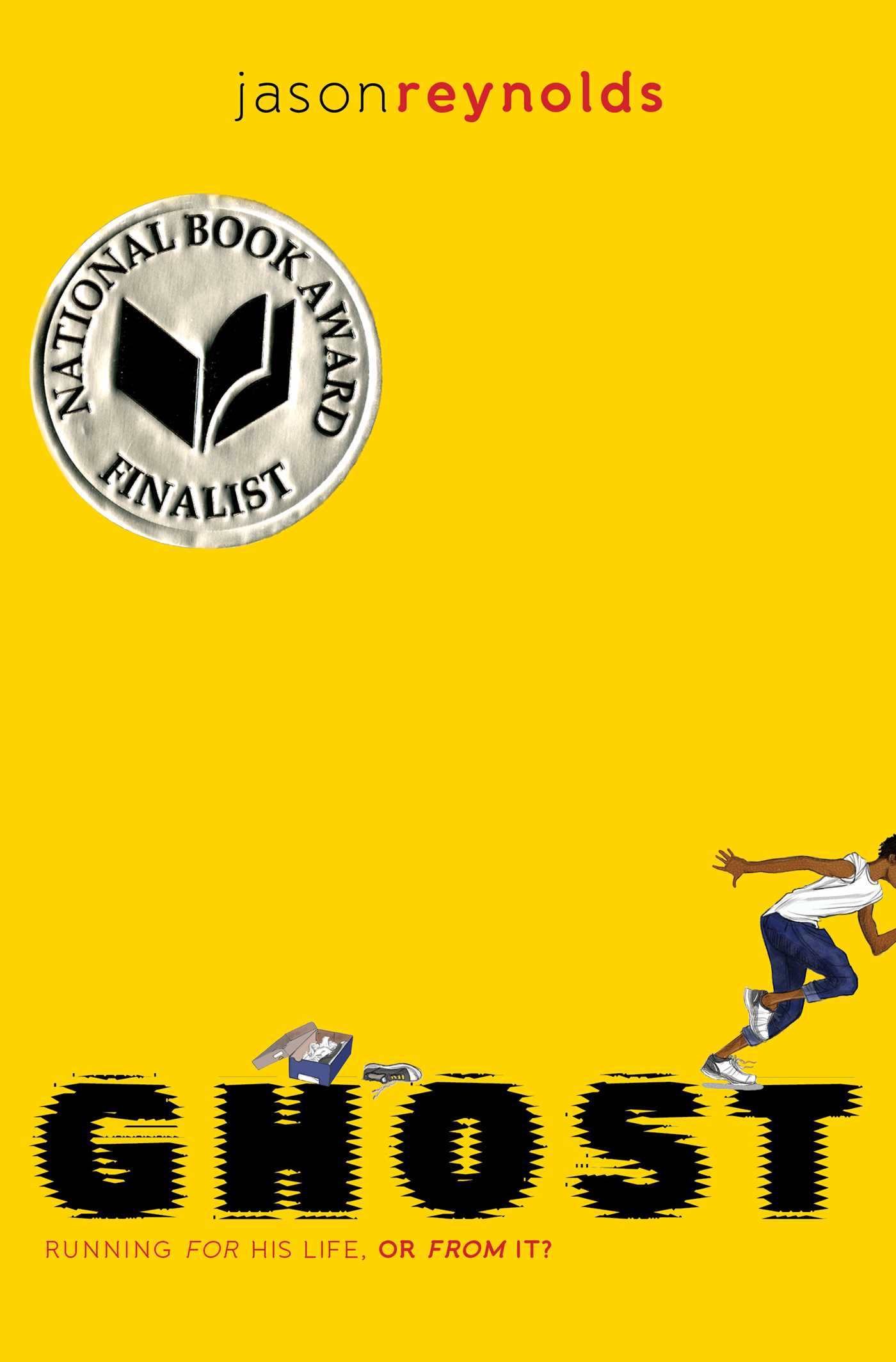
GAR Reviews – Book #97 Ghost

CONTENT WARNINGS: Gun violence, alcoholism, bullying (children on children)

I will not go into specific detail on these topics, but they may be mentioned in this review. These themes/instances are unavoidable in the book

Rating: 4/5

One of the reasons I most like the Great American Reads list is the large amount of variety that makes the list. Ghost is the first book on the list that is marketed as a “Young Reader” book and was found outside the general fiction section of my local bookstore, the back of it even suggesting ages 10 and up. At only 180 pages, it very well might be the shortest book on the list as a whole. After struggling through the last entry on the list for as long as I did, I was really looking forward to a nice and easy, read in two sittings, sort of book. Jason Reynolds’s Ghost definitely delivered on that account.

The story’s main character is a thirteen year old black boy nicknamed, by his own choice, Ghost (we love a title drop). An only child, Ghost and his mother live on one income in the “bad part” of town. Three years prior to the story’s start, Ghost’s father was incarcerated for threatening and attempting to kill his mother and himself in a bout of alcohol-fueled rage. With the young age recommendation on this book, I was originally pretty surprised to have this as a backstory that is openly discussed through the novel. I have a first grader niece, who is reading at a third grade level according to the reading program at her school (and hell yes I’m proud of her). Did I think she could handle something like that?

And then, I had to pause. An American author, writing about gun violence? Of course. The reality of the country I live in is the fact that gun violence is incredibly prevalent. Especially in schools with young children. With the first-person perspective that Reynolds writes in, we see the violence from the eyes of a young man, and it is handled with grace and the level of confusion and fear you might expect. Later in the novel, Ghost has flashbacks to the night, and my heart broke in the perfectness of the way it was captured. Reynold’s story telling really took a difficult to approach issue and made it come across in a way that makes sense for his young audience, and young protagonist.

The majority of the story doesn’t focus on these moments, though. Instead, the main point of the story is Ghost’s somewhat “accidental” joining of a running team. For someone who has only seen running as a tool, a means to escape, the idea of it requiring practice or training is hilarious to him when he sees the team meeting one day. Coach Broady, undeterred by his brush off, eventually gets the boy to join on after seeing him sprint.

The coach and three other newcomers to the team form the main cast of the story, and eventually Ghost’s support system. Being that this is the first of four novels at this time, each focusing on the perspective of one of the young people, you get a clear image of each of them. Ghost, who is typically looked over and passed by unless he’s done something wrong, finds himself supported and embraced at a time any kid truly needs it.

Ghost is a quick and enjoyable read with not a lot of things to judge too harshly. Reynold’s choice to focus on the first-person perspective lets the reader fall into the head of the main character, and the difficulties he faces as a young man. Sometimes it’s hard to write as a child and keep them sounding young, but this isn’t the case here. The troubled, but growing, young man is charming, relatable, and ready to make a change in his life.

All in all, if you’re looking for a quick, engaging read (and maybe a little series you can read with a younger sibling/niece/whatever), I definitely recommend this one.

Autumn

When the Summer air took its first chill, She walked out to her mother’s fields, brushing her fingers across corn and grain that was ready for a final harvest. The cool air whipped about the hem of her dress and rubbed against her legs like a cat looking for attention.
From the fields She took to the orchards. The apple trees were heavy, their bought laden with fruit waiting to be picked. If She closed her eyes, she could taste her mother’s sweet apple pie on her tongue, even smell the spices in the air. She wrapped her arms around herself in an embrace, in an effort to hold the warm feeling to her chest. The moment gone, she opened her eyes and continued her walk. She wove her steps between each of the trees, farther and farther from the path as they became more sparse. This was the old growth, which would be culled to make room for new saplings soon.
There was no fruit on the branches here, just rotting husks of ruined fruit around the roots. To feed the soil. And the Maggots. And the Worms. A flash of color other than brown at eye level surprised her. She smiled at the color of the fruit’s flesh; not an apple’s ruby red but blushing purple-pink.
She held the perfectly round fruit in both of her hands after she plucked it free. She turned her thumbs inward and pushed them against the skin, digging and pressing with the tips. A soft grunt and She ripped it in two, letting one half of the fruit to tumble to the ground. To join the feast.
Seeds like buried gems gathered in clusters together, the juice from on top of them, causing them to glisten in the morning’s light. She tipped her head and pressed her lips to them with a reverent sigh. Her lips were smudged and stained, the juice that did not dry dripping from them as she lifted her head after a moment
Autumn had come. And soon she would be Home.

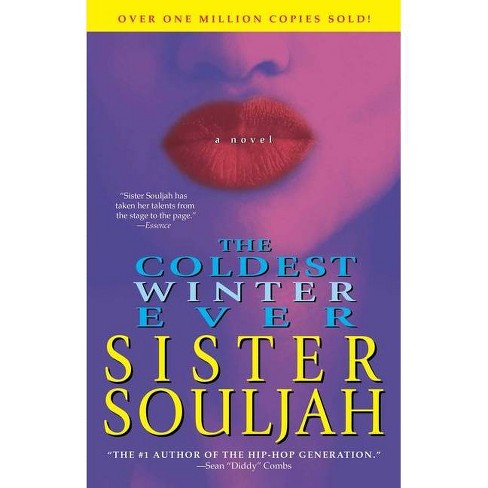
GAR Reviews – Book #98 The Coldest Winter Ever

CONTENT WARNINGS: Drugs/Drug use, Sex/Sexual situations (some mentioned/involving people under 18), Dubious consent, physical assault, violence including gun violence, abortion (as a procedure performed in story with some detail of the event)

I will not go into specific detail on these topics, but they may be mentioned in this review. These themes/instances are unavoidable in the book

Rating: 1.5/5

Three books in. Only three and we’ve come to the first one that had me second guessing this entire exercise. Or at the very least, tossing out the “finish at all costs” mentality I had taken to try to get through every book beginning to end. Before I go any further into this, I feel like it’s important to say that all forms of media have a target audience, and books are no exception. I’m a queer, white, middle-class person from the small town outside of Chicago that Svengoolie makes jokes about on his D-List horror movie review show (bonus points if you get that reference and know the town). My favorite authors are Tamora Pierce and Stephen King. My favorite books I’ve read in the last five years are The Book of the Unnamed Midwife by Meg Elison and The Fifth Season by N.K.Jemisin. All this to say, I am not Sister Souljah’s target audience for The Coldest Winter Ever. And that’s totally all right; every book isn’t for every person. However when I tell you it took me months, six if I’m being generous, I’m not exaggerating.

The book centers on WInter Santiaga, daughter of a drug dealer born in 1970s Brooklyn. At the story’s opening, WInter is just turning sixteen and her entire world is about to be pulled out from under her feet. A series of events leads to her father getting imprisoned for his crimes, and Winter is left to pick up the pieces of her life. Or start a new one.

Now, for as much as I found the book a struggle to get through, I did really love the character of Winter. Told in first person, we have her voice as the narrator all the way through. WInter is sharp, and sure of herself in a way that many people (myself included) can only dream of. Resourceful, no-nonsense, and loyal to a fault if she deems you worthy, you’re mostly sympathetic to her for the situation that she’s in. Note that I say mostly.

There are multiple occasions that Winter is given an out. She’s handed opportunities to change her circumstances, and reform herself into whatever she could want to be. But what she wants is to remain the daughter of Brooklyn drug king Ricky Santiaga and queen of the block. What starts as confidence and a sense of self turns into stubbornness and someone who has been spoiled her whole life. And it becomes absolutely exhausting, my sympathy turning into annoyance by the end of the novel.

Sister Souljah’s amazing ability to write this character, to give her a voice and make her feel so real can’t be understated here. I liked the character until I didn’t, and felt the same strength of opinion as it flipped one eighty. Sort of like the villain you love to hate in the story. But, since all we have are WInter’s opinions and voice, some of the other characters in her world feel less fleshed out and more one-dimensional. If the narrator of a first person story doesn’t like a character, we only see that part of them and they get less screen time so to say. And one of these non-Winter characters was what really broke the whole story for me.

Sister Souljah writes herself as a character in the book. This isn’t some metaphor for the author as a mirror of their environment and work: I’m talking literally, Sister Souljah appears in the book. The first few times she’s mentioned, I shrugged it mostly off. As an activist in the sort of community that Winter may find herself in, I can believe that maybe she would have heard of her. Maybe some of the characters would have attended a lecture or a speech off page. But Sister Souljah in the textural flesh makes an appearance. And not just a small one: She is one of the people that tries to give WInter an out and help her situation.

This wasn’t just a cheeky Deadpool-esq fourth wall breaking moment. No dramatic irony like Othello’s Iago turning to the audience and telling us his master plan. It shattered all suspensions of disbelief for me and I couldn’t recover. From that point on, the story became a chore to get through.

Just as the stubborn-self assured Winter wouldn’t safe herself from her circumstances (even at the story’s very end), she couldn’t save herself from this story absolutely falling apart for me.

January Wrap-Up!

Is it February 4th as I’m typing this? Maybe.

Accountability makes a hell of a difference in productivity. I know, it seems sort of obvious, but it’s also pretty easy to forget when you’re also incredibly used to going at everything on your own. January was easily my most “productive” creative month in a long time. Seems a little contradictory to be productively creative, but when you work a 9-5 (7-7 on days I have to still physically be in an office) that has nothing to do with the stuff you actually want to do, you have to schedule and plan every bit of extra time you have.
I was watching a studio vlog from one of the visual artists I like on YouTube, and they said something like how they can’t create on a schedule and that it has to feel organic and in the moment. It’s something I definitely wish I had the luxury for. But for now, I’ll settle for 6 hours a day on the weekends at the Starbucks were they’ve started to learn my order and don’t judge me too harshly for sipping one drink for most of that time. It is red velvet loaf season after all.
So, using the 2023 goals I set, it’s time for a “did we accomplish anything” round up!

1) Making Time for writing/Reading
At the start of the month, I felt sort of silly going to the bank to take out money to “pay” myself to write. Every time I shared a blog post, or spent time writing, or finished a book, I’d slip a two dollar bill into an envelope. Why 2 dollars? Honestly, it was mostly because I think 2 dollar bills are cool. And I’m on a budget.
By the end of the month, I had around fifty dollars, which went immediately to my 2023 Barnes and Noble membership and picking up the books for my February reading list. It felt really cool to buy them with money I got FOR putting work in to work on my craft.

2) Read 10 new books this year
When I wrote this one in my physical planner, I initially wrote 20 down and that felt really daunting. But! I did finish 2 books in the month of January. One of them I DID start in 2022 (that review should be up next week and OOF). But, it still counts.
Taking the time to sit down and write up my feelings and opinions about the works also ended up being pretty helpful. Years of AP English and accelerated reading programs really get into your head.
Not included there though are the massive amounts of fanfiction I’ve been consuming lately. Mostly because there’s too much of it. And the idea of the exercise of reading published works is to see what IS publishable and what sells. Much as I love reading AUs of the Silly Pirate Show That Gives Me Too Many Feelings or The One Where The Bard is The Best Character, they don’t make this list. I WILL give you recommendations though.

3) Write more nonsense
This ties directly into that fanfiction bit. Writing just to write has been really refreshing. Not having to worry or fuss over being perfect or anything. Just words coming out, with a base already in something that I don’t have to worry over. Being an over-thinking, over-designing, high-fantasy sort of writer, I tend to get lost in the weeds. What does this magic system need? Would this tree grow in this place? It’s sort of nice to have all that already answered to a degree.
Also, I tend to write a lot of male characters in my works, so it’s been interesting to write as Masendra. And totally play WoW for research. No other reason.

All in all, I’m pretty pleased with myself for keeping up with my goals so far this year. Did you set any 2023 targets? I’d love to hear about them!

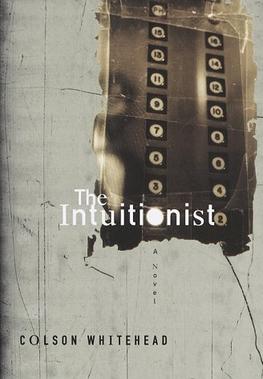
GAR Reviews – Book #99 The Intuitionist

CONTENT WARNINGS: physical violence/assault, kidnapping, racism

I will not go into specific detail on these topics, but they may be mentioned in this review. These themes/instances are unavoidable in the book

Rating: 5/5

Picking this book up and reading the synopsis of it, I can say that few books have ever felt FURTHER from something I would have enjoyed, or read on my own. A story about politics, elevator inspectors, and a heaping helping of racial allegory? And no, I’m not being metaphorical, and the elevators aren’t some fantasy thing powered by crystalline magic. We’re talking very literal (mostly, anyway) elevators. Actual. People movers. Colson Whitehead’s debut novel The Intuitionist proved my gut reaction of “I would never” wrong in so many ways.

Before I dive into the main character of the story, it’s important to set up a little bit of background for these elevator inspectors. The Department of Elevator Inspectors is made up of two factions: Empiricists and Intuitionists (we love a title drop). Empiricists are the old school, traditional inspectors. They are hands-on and by the book, physically going in and checking every gear and screw manually in their inspections. They are the old guard, and the folks in charge. There has recently been a rise in a new school or inspectors, the Intuitionists. Founded by James Fulton, these inspectors rely on meditation and feeling to do their inspections. Their…Intuitions if you will. Whitehead never calls this magic, nor does anyone in the novel. But, there is certainly an air of magic and mystery into how this is done.

The story’s main character is Lila Mae Watson, an Intuitionist. She is the second black inspector in the history of the department, and the first black woman. Not to mention she’s also enviably good at her job: Lila Mae has the best inspection accuracy rate in the department as a whole. The city and time period are never explicitly stated, but we are led to believe this is a New York-esq metro, with the story taking place in the 1940s. Black, female, and an Intuitionist, there is a target the size of a skyscraper on her back.

Lila Mae is framed for an accident that occurs at one of the buildings she is the Inspectors for, and is thrust into a world of intrigue and politics in order to clear her good name. She seeks refuge amongst the other Intuitionists in the city, and discovers that their founder’s missing journals may hold the key to the next innovation in elevators. This innovation is the so called “Black Box” and is designed to not only be the most perfect elevator, but to take humanity beyond this place, this earth, to another.

Still think this is just about racism in government systems? I sure did until the first mention of “theoretical elevators.”

Lest you think that racism plays second to magical, but not magical, elevators, I can assure you that couldn’t be further from the truth. There is a scene in the novel, where Lila Mae is sent to speak with a woman that The Intuitionists believe could have more information on where the missing journals are. She’s not sent because she’s good at her job, or because she’s the only person around them that hasn’t tried to speak to this woman yet (though that is true). One of the reasons given for why they’re so happy to send her is because, as one of them puts it “you’re both colored.” And boy oh boy let me tell you the absolutely gross feeling that, and the conversation Lila Mae had with the woman, left me with. I had to pause to take a shower.

And that isn’t the only time that I was left feeling that way, but it isn’t a bad thing. Whitehead’s discussion of race and racism is incredibly powerful. Not to spoil anything, but the interactions of Lila Mae with the other black inspector are particularly potent.

One of my favorite things about the work as a whole, outside of the mystery of the (not) magical elevator, is the way in which the story progresses. Elevators are linear things, literally on rails to go only up or down. There is a beautiful dichotomy in the fact the story itself jumps around on the timeline. Sometimes we’re looking at Lila Mae Watson in school, sometimes we’re in the Intuitionist Headquarters. We may be just about to find the next piece of the puzzle, and then we’re whisked away to the past. There was something so enticing about a non-linear story being told about linear objects.

As the story transforms from Lila Mae watson being betrayed and framed as a political tool in a fight for white men scrabbling for power, to the search of an elevator to a higher state of existence, Colson Whitehead’s immaculate storytelling is a steady and driving thing. The Intuitionist is a story about politics, race, the connections between the two, and elevators. Beautiful, literal, elevators. With an ending that left me noth questioning what I just actually happened, and completely understanding how fantastic it was, I was wholly pleased.

Sometimes it’s nice to be reminded of that old adage: don’t judge a book by its cover. 

Lunch Break

Lichen and Wisteria are green mage siblings that are the focus of a larger project I’ve been working on and they wanted to take over my brain today. Lichen works with plants, Wisteria works with animals. They are ordered to take over running businesses owned by their guild in a large city and accidentally get involved in a political uprising. But some days, they also just have to do work like normal people.

*~*~*~*

If the Guildmaster had told Wisteria that a major part of her work when taking over the Tower’s fauna business would be acting as a glorified familiar groomer for the biggest part of her day, she may have gotten up more courage to tell the man no. There were people that did this creatively for a living in Automa, she had even gone into their shops to see how in the seven hells she could offload the work onto them. Even took to handing out discount cards given to her by some of them to the mages who still insisted on bringing their beasts to her.

“Well the old Stablemaster did it.” one of them had huffed as they fussed over their terrible little mink that had made a mess of Wisteria’s office.

What she wanted to say in response was no, the former Stablemaster absolutely did NOT groom familiars. They had an apprentice who couldn’t say no to anything or they would be shipped back to the Tower in humiliation. She had numerous journal entries from the old Witch to prove it.

Instead she simply gave the tightest, least forced smile she could muster and took the payment from the mage.

“Of course. We will be making some adjustments to our offerings, with the change in management.” a speech she had given multiple times at this point. Approval from the offices couldn’t come soon enough. “In fact, we’re partnering with several of the groomers within the city…”

She went through the rest of her “please get out of here and only come back if your familiar has a medical emergency” speech. Her attitude didn’t win her any tips, but she couldn’t bring herself to care. It was time for lunch and she needed to leave before someone tried to sneak in early for an appointment.

Wisteria flipped the sign to the “out to lunch” side and cleaned up before walking out of the office. It was baffling that the two offices didn’t have a joined door between them, the flora and fauna practices. Having to walk outside and then back in was an annoyance. The comptroller at the Guild office had made it very clear they wouldn’t pay for it though, so they would have to suffer for now.

Speaking of suffering: Lichen clearly was not. He had always been better at dealing with people than she had been. When you are a mage whose power comes from animals, it shouldn’t be a surprise, though. As she opened the door, she could see a young man leaning forward on the counter her brother stood behind. The cut of his coat and the bag over his shoulder marked him as a courier, the red and gold matching the colors of the Metalsmiths guild. She cleared her throat, arching an eyebrow when her brother glanced over briefly and held up a finger to say “one second.”

The courier’s eyes widened, judging by the way their eyebrows raised over their dark lenses. He straightened himself immediately, as if he had been caught doing something terrible. He mumbled something between an apology and a “good afternoon Mage Wisteria” as he brushed past her and out the door.

“What have I told you about flirting with customers, Lichen?”

“Make sure to start before they pay, so that way I get a better tip.”

“Lichen-”

“Kidding, kidding.”

After a few keystrokes to make sure the register was locked down, he stepped out from behind the counter. The clock chimed one o’clock as he met her at the door.

“Besides, that nice lad just paid for our lunch.” Lichen grinned. “Those metal guild mages. Say one nice thing to them and they turn to putty.”

Wisteria couldn’t complain too much about that. Orders from the other guilds paid better than anything from regular folks, even though they were fewer and further between.

“Still, you should leave the other Guildbornes alone. Last thing we need right now is some inter-guild incident.”

“Can’t help that I’m so popular.”

Before she could scold him further, Lichen gripped her arm and pulled her out the door. Locking it behind them, he beamed up at her.

“Speaking of popular, how about that cafe on Main?”

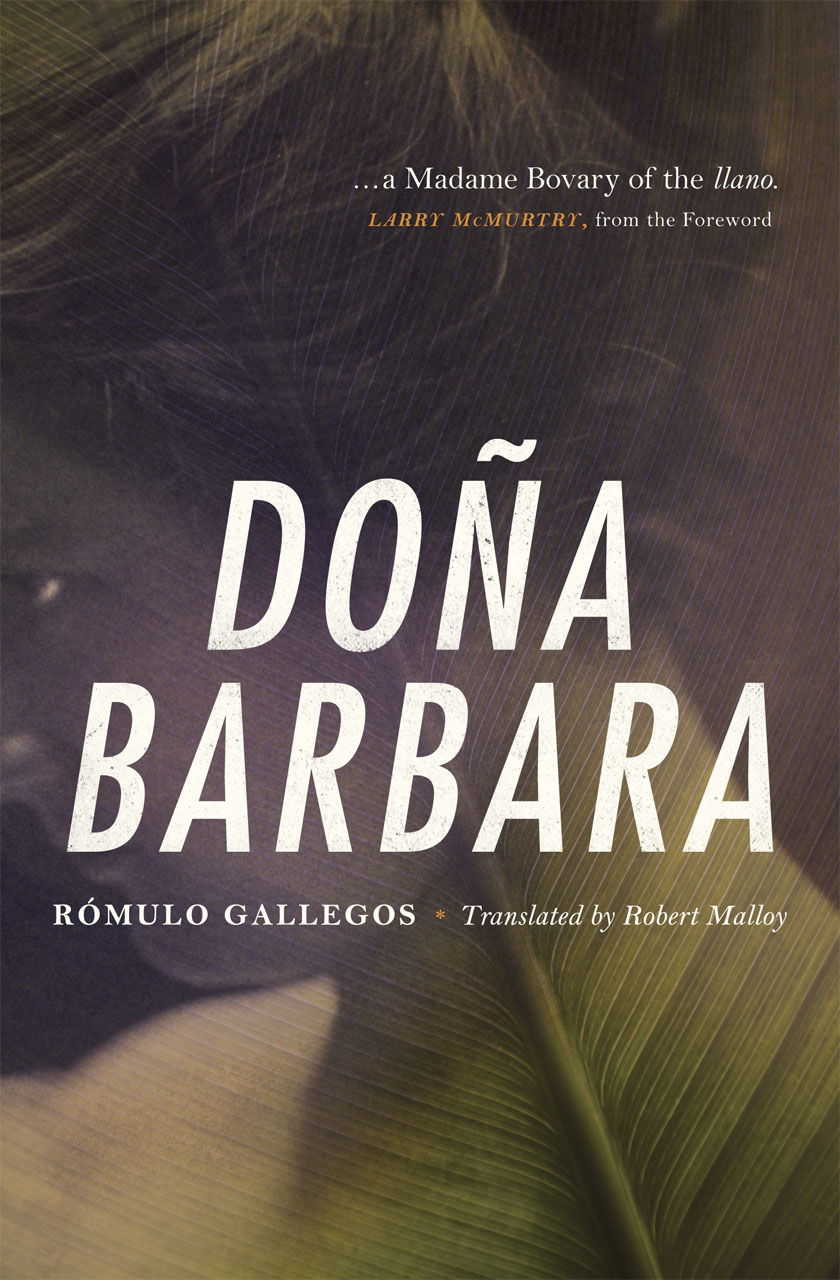
GAR Reviews – Book #100 Doña Bárbara

CONTENT WARNINGS: Sexual assault/rape, physical assault, time-period typical violence (including gun violence), murder

I will not go into specific detail on these topics, but they may be mentioned in this review. These themes/instances are unavoidable in the book

Rating: 3/5

Though this was the first book on the Great American Reads list, this was actually the second one I ended up reading. Perhaps unsurprisingly, even at a decent-sized Barnes and Noble there isn’t a huge demand for English translations of 1920s Venezuelan literature so I did have to get it ordered in. I’ll admit, seeing it compared to Madame Bovary right on the cover gave me some wicked flashbacks to AP Literature. As far as books I had to read in high school that one wasn’t on my shit list (looking at you, Huck Finn) so I wasn’t overly worried. To get a little AP Lit for a moment, I do want to talk a little bit about the author before I talk about the book itself.

Rómulo Gallegos was a Venezuelan politician and novelist, who served as the nation’s first democratically elected president in 1948. First published in 1929, the backlash from Doña Bárbara forced Gallegos to flee his homeland to Spain until 1936. It’s important to know that the book itself was written with a critique of the Venezuelan dictator Juan Vicente Gomez at its heart in order to appreciate it fully. On its most basic level, the conflict between Doña Bárbara and Santos Luzardo is the old ways of the world versus the new. Layering on the political past and dictatorship versus the new change and push to democracy, on top of the two characters, you’re given an enriched view of how readers at the time would have regarded the story and its eventual end.

The time period of Doña Bárbara’s writing places it somewhere between the gothic traditions and very early in magical realism. As an avid fantasy reader, I have some experience with magical realism before picking this book up which I feel like also helped me get through some of the more dry and political portions. Stylistically, magical realism does exactly what it says: blends magical and “mundane” elements. Fantasy and the supernatural are used to make a point and statement about the very real world the characters find themselves in. While I would have loved to see more done with the supernatural and fantastical elements Gallegos employs with the title character, it also makes sense that they don’t take top billing. Don’t get me wrong, a curse on a family line being the manifestation of generational curses and trauma? Absolutely delicious. But when you’re writing from the position of someone who lives under the rule of a very real dictator it’s also important to show that they are human and not a supernatural monster.

Speaking of magic though, let me talk about the witch Doña herself. Called a “devourer of men” she uses her beauty and her powers to empower herself. Socially, a woman pushing violently against the traditional boundaries of quiet and submissive would have been very othering in itself. Add in a very literal (and reasonable when you learn of her history) hatred of men, and her bend towards “mannish” dress and mannerism and you’ve spectacularly othered her physically and spiritually. For much of the story, I loved the way she embodied the idea of the magical realism hero.

Oh but wait. If you pick this book up thinking you’re going to get 400 something pages about a wicked, larger-than-life, sorceress and her struggles with change and her own power, you’re going to be as disappointed as I was. For a book that bears her name, Doña Barbra gets second billing to Santos Luzardo, her cousin. After spending most of his adult life in the city and far from the Llano (prairie) of his youth, Luzardo returns to reclaim his family’s land, and in turn his destiny. He spends a large portion of the book fighting an internal struggle between his “modern” sensibilities as a lawyer and the traditions of his people. One I would much rather have seen Doña Bárbara herself deal with.

Honestly, I found Luzardo incredibly boring and I cared very little about him. The setting he resides in is beautifully and lovingly rendered; you could truly feel the passion and devotion Gallegos has for his country and the people in it. There were times in the story, though, that I hoped the main character would fail just to see if someone more interesting would take his place. And there were PLENTY of side characters that I felt had more color to them I would have liked to see become the voice of the story.

The story’s conclusion was also pretty disappointing for me. Gallegos spends so much of the book as a master of the setting and the mysteries he has put in it. Conflict after conflict has built up, and you come to the end, waiting for some major fall out, some battle between good and evil and…It simply fizzles out. I specifically remember setting the book down, having had to re-read the last chapter multiple times to make sure I wasn’t missing something and said “that’s REALLY it?”.

In summary, Doña Bárbara is a beautifully written story by a man seeking to critique a real world monster using the supernatural as metaphor. For a modern reader, far removed from the political importance of the time, the power is lost. We are left with a titular character with second billing to a far less charismatic character, and an ending that feels disappointing at best. While there is enough present to keep you reading through to the end, it may be a struggle. I wouldn’t give the book an immediate pass, but would certainly warn you to be prepared: This may be Doña Bárbara’s book, but it isn’t her story.

Salvaging the Dead Draft

Last year, I had a story I was working on for a gift for my sister based of a prompt she had given me that she liked the idea of. I spent months working on this thing, and hated every single draft and version I came up with. But I kept trying. By the fourth or fifth try, I finally had enough and shelved the whole thing. Over-writing or over-working an idea is very, very, real and can be incredibly frustrating. You’ll keep telling yourself “oh this is a great idea. I just have to change this one thing” and then one becomes a dozen. Becomes an entirely new plot outline. Which then becomes fodder for the “forget it” folder.

In the moment, everything can seem terrible from a failed draft or project. You look at the time and the amount of the energy you poured into a piece that didn’t get accepted for a competition letter, or maybe that you got a rejection letter from a query on and only see a waste. Or if you’re like me, you look at that “forget it” folder in your filing cabinet and see years of ADHD that went untreated. Right story (maybe) at the wrong time (definitely). In a lifetime when you only have so many stories to write, what do you do with the things that didn’t work?

Over the last week or two, I picked back up the folder with that failed gift, to give it another read. There, amongst the ashes of a story that might have worked in eighteen other ways, I found it. A single character that meant absolutely nothing to that story as a whole, but might be interesting pulled out of it. A few hours later, I had a two thousand word short story that was nothing like what they started out in. But it worked, and I LIKED it.

It’s sort of like a forest fire. When they’re left to rage uncontrolled, they’re detrimental and dangerous. But contained, they promote healthy forest growth and are a natural part of the cycle of things. Sometimes, it’s okay to burn in order to foster new, healthy growth.

Or in my case, find an asexual pirate who accidentally becomes best friends with the Siren family that was going to eat his whole crew.

The Great American Read Project

Affectionately being named GAR GAR Books

In 2022 I tried, and then spectacularly failed, at trying to get back into reading. While reading and writing have been a part of my personality and life since before I could tie my shoes (still debatable if I can), I’ve had a hard time picking up anything new. If you read my post about making resolutions, you’ll know I talked about depression and ADHD and how they’ve impacted my day to day. Unsurprisingly, it carries over into being creative or sitting down to really enjoy a book.

With my medication and therapy finally in a good place, I’ve decided to give it another go. But honestly? Looking at my TBR and shelves of shame, it’s been a nightmare knowing where to start. Not to mention new books that I walk past every week when I pop into my local indie shop (support your local bookstore please and thank you).

Last year, I discovered a list put together by PBS in 2018 for a series called The Great American Read. To generate the list, they created a public poll that asked people what their favorite book was, which received 7200 answers. Considering how many “top 100” or “45 books to read before you turn 45” lists there are out there, the fact that I trust PBS as a source wasn’t the only reason I really loved the list they put together.

Once the initial list was put together, a panel of 13 “industry professionals” set about narrowing it down with this criteria in mind:

  1. Each author was limited to one title on the list.
  2. Books published in series or featuring ongoing characters counted as one eligible entry on the list (e.g.  Lord of the Rings)
  3. Books could be from anywhere in the world as long as they were published in English.
  4. Only fiction could be included in the poll.

This criteria took care of so many issues I have with most of the big “top x” lists. So often, the “greats” or “classic writers” will have three, sometimes four, entries which limits someone’s exposure to new writers if they’re following along. And look, I barely want to read ONE book from Jane Austen and the Bronte sisters, let alone three.

When I took my first look over the list as a whole, I figured I had probably read about a quarter of the books on the list at least one time, from having to for school and personal reading. While that might not seem like a lot for someone who professes to be bookish, I’m also typically pretty specific about what I do read. I’m almost solely a genre reader for lack of a better word; my bookshelf is full of fantasy, sci-fi, and horror novels. While these all have a place on the PBS list, they certainly aren’t the majority or the focus.

Starting off on this journey, the main goal is, of course, to take my time and get through all 100 books on the list, starting at 100 and working my way up to number one. I did consider also trying to read all the books in a series when it came up as an entry. But the sheer page count of some of them (Sanderson and Martin) shut that down pretty quickly. Instead, I’ve decided on just one goal: Don’t DNF any of the books. No matter how long it takes. Even if it means putting it down for weeks at a time to read something in between, just read each of the 100 books in their entirety.

I wouldn’t necessarily recommend you force yourself to finish something you don’t truly like. But as much as I’m doing this to get back in to reading in general, I’m also taking this as an opportunity, as a writer, to expose myself to new writers and writing styles. Even if I personally don’t love novels in the first person or certain classic masterpieces. Seeing what’s out there that people would call their “favorite” is important.

Between last year and as of writing this, I’ve gotten through #97-100 on the list and can already say it’s definitely going to be an interesting challenge to get through. I plan on sharing reviews, going back and writing them up for the ones I’ve already done, as I work my way through. 

You can follow along with the full list of books, as well as more details about the survey and the subsequent show/coffee table book they put out if you’re into that sort of thing here. As well as I’ll be maybe on twitter shouting my feelings into the void as I progress. Because let me tell you, there’s going to be FEELINGS about some of these, and not always positive. Looking at you entry number 86. Gods help me looking at you.

2023 Writing Goals – ADHD Writer Edition

Coming out of a global pandemic, shortly after dealing with a personal health crisis in 2018-2019, it’s been a rough half a decade. With things finally settling down, I’ve been able to shift my focus from “OMG please try not to die” to my mental health.

Do you have any goals for writing or reading this year? Let me know!

Note: I am going to touch on some of my own journey with depression. If you just want to see goals, they’ll be on page 3. Take care of yourself ❤